Why Does the Brain Fall in Love? — The Psychology Behind Addiction
Author - Anay Kate
Why does our brain fall in love in the first place?
Because love and addiction share some of the same neural circuitry.
When we fall in love, the brain activates the mesolimbic dopamine system — the same reward pathway involved in substance use (Bianchi-Demicheli et al., 2021; Tomasi & Volkow, 2020). Dopamine doesn’t just make us feel good. It tells the brain: “This matters. Do this again.”
Romantic love increases:
Dopamine (motivation and reward)
Oxytocin (bonding and attachment)
Reduced activity in the prefrontal cortex (less critical thinking — which explains a lot, honestly)
Addictive substances and behaviours activate this exact same circuitry (Volkow et al., 2021; Kim & Potenza, 2022). The brain doesn’t strongly distinguish between falling for a person and falling for a substance — both stimulate motivation, craving, and reinforcement systems.
In other words:
Your brain falls in love because it evolved to prioritize survival and bonding.
Addiction happens when something artificial repeatedly presses that same bonding button — without the healthy relational outcome.
Addiction is now understood as a chronic brain condition involving reward, stress, and self-control systems — not a moral failure (Heilig et al., 2021; Kwako et al., 2020).
What Is Actually Happening in the Brain?
Your brain’s reward system includes the ventral tegmental area (VTA), nucleus accumbens, and prefrontal cortex. These regions work together to detect rewards and reinforce behaviours (Tomasi & Volkow, 2020).
Repeated exposure to substances or high-reward behaviours leads to neuroadaptations — physical and functional changes in dopamine signalling and executive control circuits (Zilverstand et al., 2020; Volkow et al., 2021).
Over time:
The reward system becomes hypersensitive to the addictive stimulus
The prefrontal cortex (decision-making system) becomes less effective
Habit circuits become stronger
This shift explains why addiction starts feeling automatic rather than intentional (Heilig et al., 2021).
Where Does Addiction Take Shape?
Certain environments increase risk:
• High stress (“I’m so stressed, one won’t hurt, I need one for the peace of mind”)
• Easy access (“Hey it’s so cheap” and/or “Its just 2 mins walking from my place”)
• Social normalization (“everyone does it”)
• Isolation (“I have nothing better to do/no one to hang out with”
• Media representation (“certain favourite characters do it so it must be good”)
• Social comparison (“my friend does it too, I’ll stop when it affects them”)
Chronic stress in particular alters the brain’s stress-reward interaction systems, increasing vulnerability to compulsive use (Courtney & Ray, 2020).
Environmental cues also become neurologically powerful. Brain imaging studies show that exposure to substance-related cues activates reward circuitry and predicts relapse risk (Vafaie et al., 2022).
Your brain learns shortcuts — and they light up automatically.
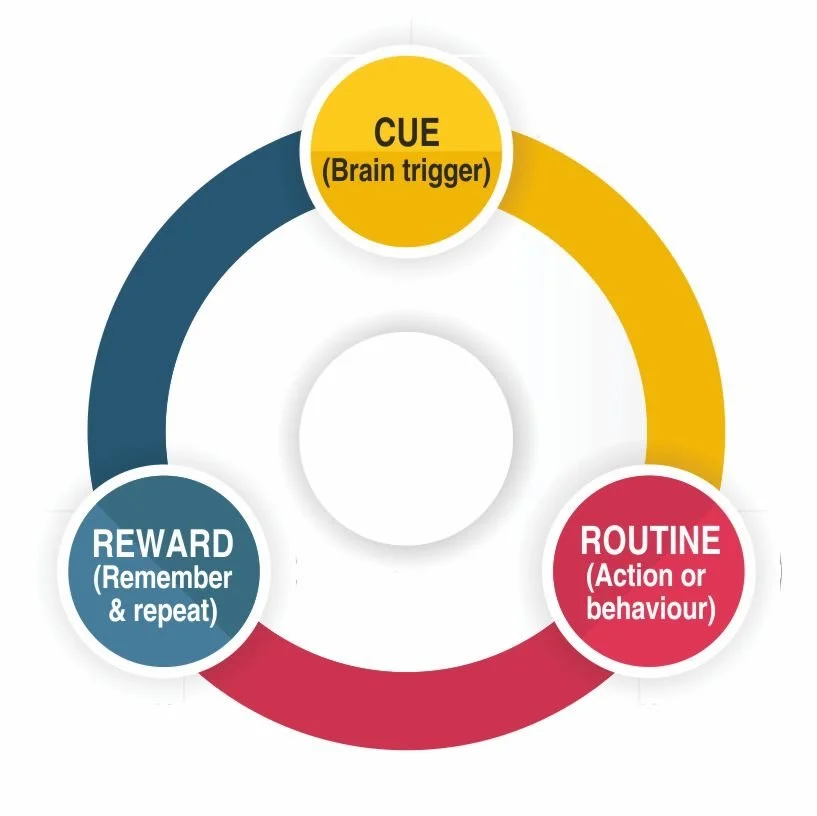
(This is how addiction takes control)
Why Does It Matter?
Because addiction doesn’t just affect behaviour — it affects how you think, feel, and respond to stress.
Over time, stress systems in the brain become more sensitive. Everyday problems can feel overwhelming without the substance or behaviour.
You might notice:
Lower attention span
Mood swings
Trouble sleeping
Irritability without the habit
Choosing the behaviour over relationships
And here’s the tricky part: addiction runs on learning.
Through classical conditioning, your brain links cues to cravings.
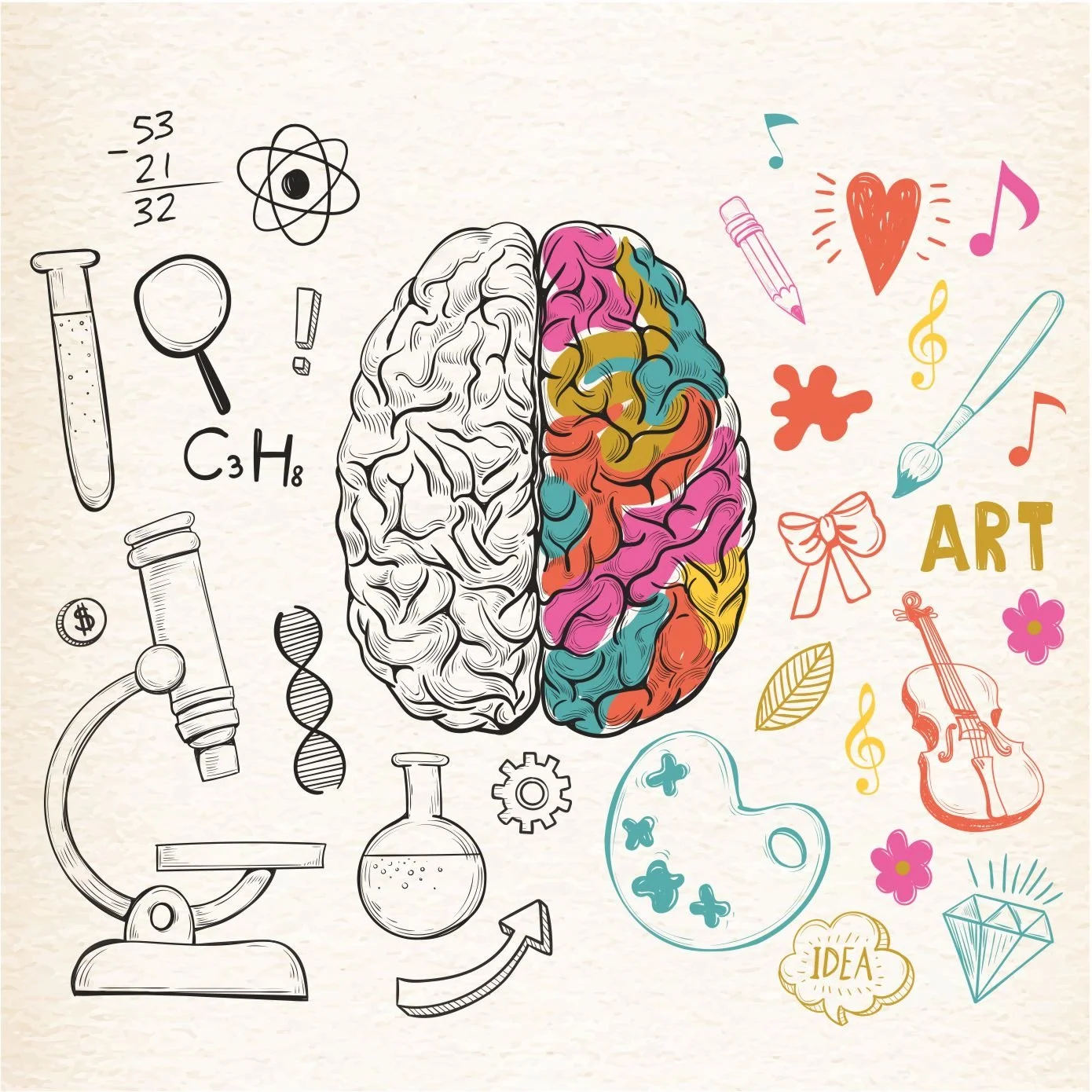
(Your brain can easily be rewired into more positive behaviours or ‘addictions’)
For example: imagine you only drank alcohol at parties. Over time, loud music, certain friends, or even getting dressed to go out can trigger cravings. Your brain has paired those cues with alcohol before — so now they activate anticipation automatically.
Through operant conditioning, short-term rewards outweigh long-term consequences.
Using the same example: drinking alcohol makes you feel relaxed or confident. So the next time you feel stressed or anxious, your brain remembers: “That helped last time.”
Operant conditioning basically says: “That felt good. Let’s do it again.”
Your brain becomes very efficient at reinforcing something — even if it isn’t good for you in the long run.
Is Addiction in Your DNA?
Addiction is not just behavioural or environmental — it also has a genetic component.
Large-scale genomic studies show that genetic factors account for approximately 40–60% of vulnerability to substance use disorders (Deak & Johnson, 2021; Sanchez-Roige & Palmer, 2020).
There is no single “addiction gene.” Instead, multiple genes influence:
Dopamine receptor sensitivity
Stress reactivity
Impulse control
Reward responsiveness
Genome-wide association studies have identified genetic variants linked to problematic alcohol, opioid, and nicotine use (Zhou et al., 2022).
But here’s the important part:
Genetic predisposition does not equal destiny.
Genes increase susceptibility — they don’t determine outcome. Protective environments, coping skills, therapy, and social support significantly reduce risk (Sanchez-Roige & Palmer, 2020).
Genetics may load the gun.
Environment and experience determine whether it fires.
How Does Recovery Work?
The brain is plastic — meaning it can rewire.
Evidence-based therapies such as cognitive behavioural therapy (CBT), motivational interviewing, and contingency management have strong empirical support (Magill et al., 2020).
Neuroimaging research shows that recovery is associated with improved prefrontal functioning and reduced cue reactivity over time (Zilverstand et al., 2020).
Addiction is learned.
Recovery is learned too.
Quick Reality Check
Addiction DOES NOT mean your brain is broken.
Addiction DOES NOT mean you are weak.
Addiction DOES NOT mean you lack self-control.
It means your brain learned something very well — maybe too well.
And here’s the hopeful part: if the brain can learn addiction, it can also learn recovery. Neuroplasticity — the brain’s ability to rewire — works both ways.
(Addiction is not your brain’s fault but its strength at being too good)
You might not delete the red “reward” button completely. But you can stop letting it run the entire control panel.
If You’re Seeking Help
Addiction thrives in silence. Recovery thrives in support.
🌍 Global Support
1. SMART Recovery (International) Science-based peer support meetings (online & in person) https://www.smartrecovery.org
2. UNODC Drug Dependence Treatment Portal Global treatment and support information https://www.unodc.org
🇦🇺 Australia
1. Lifeline Australia 24/7 crisis support 📞 13 11 14 https://www.lifeline.org.au
2. Alcohol and Drug Foundation (ADF) Evidence-based information and treatment directory https://adf.org.au
If you’re unsure whether your habits are becoming problematic, consider speaking to a healthcare professional or completing a validated screening tool such as the AUDIT (Alcohol Use Disorders Identification Test) or DAST-10 through a qualified provider.
References
Bianchi-Demicheli, F., Ortigue, S., & Grafton, S. (2021). The neurobiology of romantic love: A review of fMRI evidence. Neuroscience & Biobehavioral Reviews, 131, 103–118. https://doi.org/10.1016/j.neubiorev.2021.09.012
Courtney, K. E., & Ray, L. A. (2020). Neurobiology of stress and addiction. Psychopharmacology, 237(1), 1–16. https://doi.org/10.1007/s00213-019-05359-7
Deak, J. D., & Johnson, E. C. (2021). Genetics of substance use disorders: A review. Psychological Medicine, 51(13), 2189–2200. https://doi.org/10.1017/S0033291721000963
Heilig, M., MacKillop, J., Martinez, D., Rehm, J., Leggio, L., & Vanderschuren, L. (2021). Addiction as a brain disease revised: Why it still matters. The Lancet Psychiatry, 8(6), 495–503. https://doi.org/10.1016/S2215-0366(20)30537-9
Kim, S., & Potenza, M. N. (2022). The neuroscience of behavioral addictions. Current Opinion in Behavioral Sciences, 46, 101178. https://doi.org/10.1016/j.cobeha.2022.101178
Kwako, L. E., Momenan, R., Litten, R. Z., Koob, G. F., & Goldman, D. (2020). Addictions neuroclinical assessment framework. Biological Psychiatry, 88(3), 172–183. https://doi.org/10.1016/j.biopsych.2020.01.016
Magill, M., Kiluk, B. D., Ray, L. A., et al. (2020). A meta-analysis of cognitive-behavioral therapy for alcohol and drug use disorders. Journal of Consulting and Clinical Psychology, 88(8), 675–690. https://doi.org/10.1037/ccp0000511
Sanchez-Roige, S., & Palmer, A. A. (2020). Emerging genetic insights into addiction. Nature Reviews Genetics, 21, 489–503. https://doi.org/10.1038/s41576-020-0227-y
Tomasi, D., & Volkow, N. D. (2020). Associations of dopamine signaling with addiction vulnerability. Biological Psychiatry, 87(10), 925–933. https://doi.org/10.1016/j.biopsych.2019.10.012
Vafaie, N., et al. (2022). Association of drug cues and craving with drug use and relapse outcomes: A systematic review and meta-analysis. JAMA Network Open, 5(4), e2220469. https://doi.org/10.1001/jamanetworkopen.2022.20469
Volkow, N. D., Koob, G. F., & McLellan, A. T. (2021). Neurobiologic advances in addiction. New England Journal of Medicine, 374(4), 363–371. https://doi.org/10.1056/NEJMra1511480
Zhou, H., Rentsch, C. T., Cheng, Z., et al. (2022). Genome-wide meta-analysis of problematic alcohol use. Nature Neuroscience, 25, 1184–1195. https://doi.org/10.1038/s41593-022- 01078-0
Zilverstand, A., Huang, A. S., Alia-Klein, N., & Goldstein, R. Z. (2020). Neuroimaging impaired response inhibition in addiction. Neuroscience & Biobehavioral Reviews, 118, 155–169. https://doi.org/10.1016/j.neubiorev.2020.07.024